
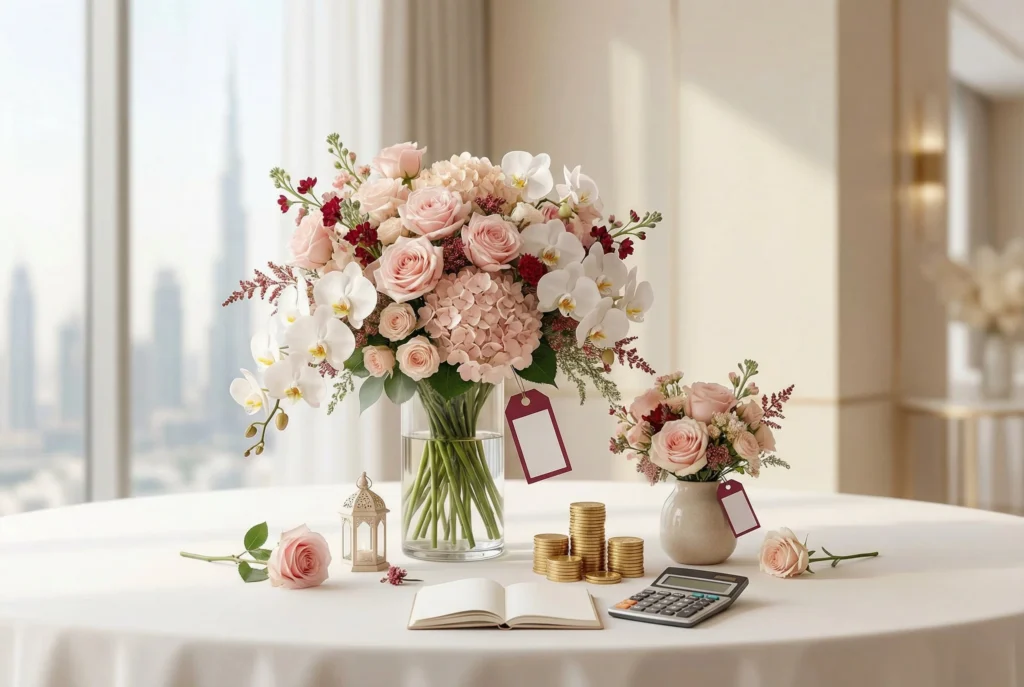
There is a way to halve your floral budget and have nobody notice. There is also a way to halve it and have it obvious in every photograph. The difference is knowing which costs are structural and which are optional.
This guide is about getting cheap wedding flowers that look considered rather than compromised, using realistic Sydney numbers.
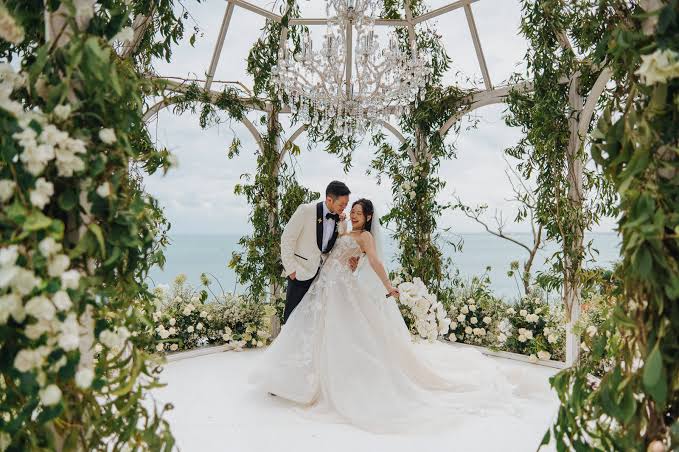
The savings that genuinely work
1. Marry in the right season
Winter and early spring are the value seasons in Sydney. June through August brings lower florist demand, better availability and cheaper stock: camellia, hellebore, jonquil, tulips, banksia and wattle.
Autumn is the quality sweet spot, with garden roses at their peak and reliable weather. Late spring Saturdays are the most expensive slots in the calendar.
2. Let foliage do the volume
Eucalyptus, olive branch, pittosporum and native foliage cost a fraction of flowers and create most of the visual bulk. A greenery-dominant design with a few excellent focal blooms is the single most reliable route to cheap wedding flowers that still photograph beautifully.
3. Choose natives
Waratah, banksia, protea, kangaroo paw, flannel flower and geraldton wax are locally grown, dramatic, heat and wind tolerant, and reasonably priced. They also look distinctly Australian rather than generic.
4. Fewer, better arrangements
Alternate floral centrepieces with candle-and-greenery tables. Guests read it as intentional design, and you halve the centrepiece count.
5. Repurpose ruthlessly
Ceremony arch flowers become the bridal table installation. Aisle posies become bathroom and bar arrangements. Pay someone a hundred dollars to move them; it is far cheaper than buying twice.
6. Simplify the arch
An asymmetric corner treatment or two dressed plinths photographs as well as a fully covered arch and costs a third as much. Density, not size, is what drives installation pricing.
7. Cut the low-impact items
Floral crowns, cake flowers, chair flowers, bathroom arrangements and buttonholes for extended family are the first things to go. Almost nobody notices their absence.
8. Bud vases
Five to nine small vases with one or two stems each per table. Charming, modern, and dramatically cheaper than a single large centrepiece.
9. Candles carry the room
Atmosphere at a reception comes from light more than flowers. A heavily candlelit room with modest greenery looks expensive for very little money.
10. Be honest about your number
Tell your florist your real total at the first consultation. A good one will design to it. Pretending it is flexible and then cutting items in month eight produces a worse result.
The savings that backfire
Skipping the bridal bouquet budget. It is held for hours and appears in more photos than anything else. This is the last place to cut.
Full DIY for a large wedding. Bulk boxes can save forty to sixty percent, but you inherit conditioning, timing, arranging and storage, plus two lost days before the wedding. It works for small weddings and confident people, and it goes badly for everyone else.
Out-of-season flowers in cheaper form. Imported peonies for a March wedding are expensive no matter how you buy them, and the budget version is tired.
Cutting delivery and setup. Collecting flowers yourself on the wedding morning is a well-documented source of chaos.
Hiring the cheapest quote without checking scope. Two quotes twenty percent apart are frequently thirty percent apart on what is actually included.
Faux flowers throughout. Good silk is expensive. Cheap silk is instantly obvious in photographs.
Realistic Sydney numbers for a low budget
For a hundred guests across ten tables, a genuinely lean but lovely floral package looks like this.
- Bridal bouquet, in-season focal flowers: $250
- Three bridesmaid bouquets at $100: $300
- Four buttonholes at $22: $88
- Two ceremony plinth arrangements, repurposed later: $400 Five floral centrepieces at $90, alternating with candles: $450
•• Candles and greenery for the other five tables: $200
- Delivery and setup: $250
Total: around $1,940. That is a complete, coherent design at well under half the Sydney average, achieved entirely through seasonality, repurposing and alternation rather than by sending anything that looks cheap.
Timing your wedding date
The date drives more cost than any single flower choice. Friday and Sunday weddings, winter dates, and nonpeak months all improve florist availability and pricing.
It is worth knowing what everyone else is doing. ABS data on marriages and divorces in Australia reports marriage numbers, rates and popular wedding dates, and the pattern is consistent: the most contested dates are the most expensive ones across every supplier category, florists included.
Why in-season means cheaper and better
This is not a marketing line, it is production economics. Flowers grown in their natural window in NSW require less intervention, less transport and less storage, so they cost less and arrive with more vase life remaining.
That production reality is the subject of formal study. The horticulture major within agricultural science at the University of Queensland covers the growing of flowers and other crops, propagation, plant breeding and sustainable production, which is the machinery behind why a seasonal local stem is both better and cheaper than an out-of-season imported one.
The practical takeaway for anyone chasing cheap wedding flowers: ask what is at its absolute best in your wedding month, then design around that answer.
How to brief a florist on a tight budget
“One hundred guests, ten tables, autumn, total floral budget two thousand dollars. Priorities are the bridal bouquet and the ceremony. Happy with greenery-led tables and candles, happy to repurpose, happy to use whatever is in season.”
That brief gets you a great outcome. It tells the florist the constraint, the priority and the flexibility, which is everything they need to make cheap wedding flowers look like a deliberate aesthetic rather than a compromise.